From tooling to finished production
Mold design and tooling, connected to production.
Product development feeds directly into mold development, and molding connects to finishing, assembly and packing. Tools are designed, cut, simulated, trialled and maintained within the same manufacturing platform that runs the parts.
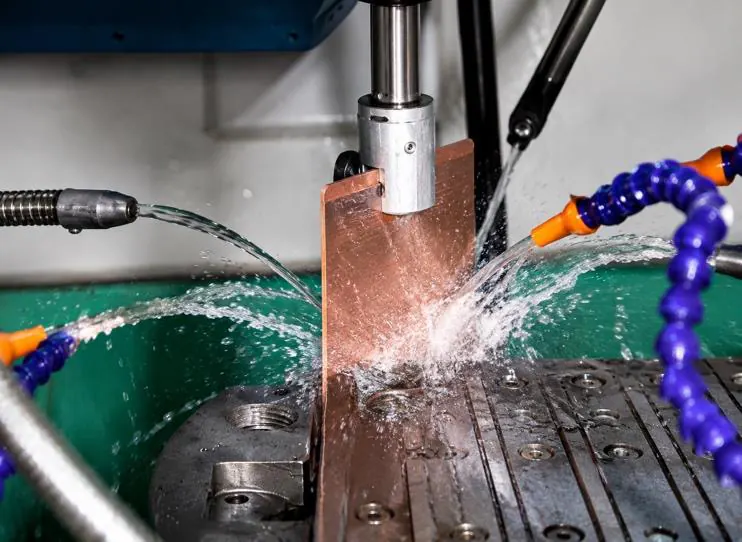
Tool room
From CAD to a qualified, production-ready tool
A mold is the largest fixed cost in an injection program and the decision hardest to reverse. Keeping the tool chain on the same platform as production means the people who cut the steel are the people who run it.
Tooling capability
- Mold design and CNC machining
- Mold flow simulation before cutting
- Cooling-channel layout and optimization
- One-mold, multiple-cavity tooling
- Manual trial and fit-up
- Mold maintenance and repair on site
What that changes
When tooling sits with a separate supplier, a fit problem found at trial becomes a negotiation: whose tolerance, whose cost, whose schedule. When the tool room works alongside the presses, it becomes an engineering task.
It also changes the economics of iteration. Minor geometry changes for manufacturability — a draft angle, a gate location, a rib thickness — become engineering conversations rather than change orders.
Tools stay on the platform for their production life, so wear is tracked against the parts actually coming off the machine.
Workflow
From tooling to finished production
Six stages, coordinated as one program. Fewer handovers between suppliers, and clearer accountability throughout development and production.
Product development
Geometry, material and volume reviewed with your team, from concept sketch to production-ready CAD.
Mold development
Tools designed, cut, trialled and maintained within the same manufacturing platform that runs production.
Injection & blow molding
Thirty injection presses from 160 to 1,360 tons, with over-molding and blow molding for hollow parts.
Secondary processing
Vacuum plating, laser engraving, hot stamping, spray painting and printing, next to the presses.
Assembly
Five assembly lines combining ultrasonic welding with manual assembly for multi-part builds.
QC, packing & delivery
Final inspection and packing on the platform; logistics and delivery coordinated by DAPY Industries.
Machining
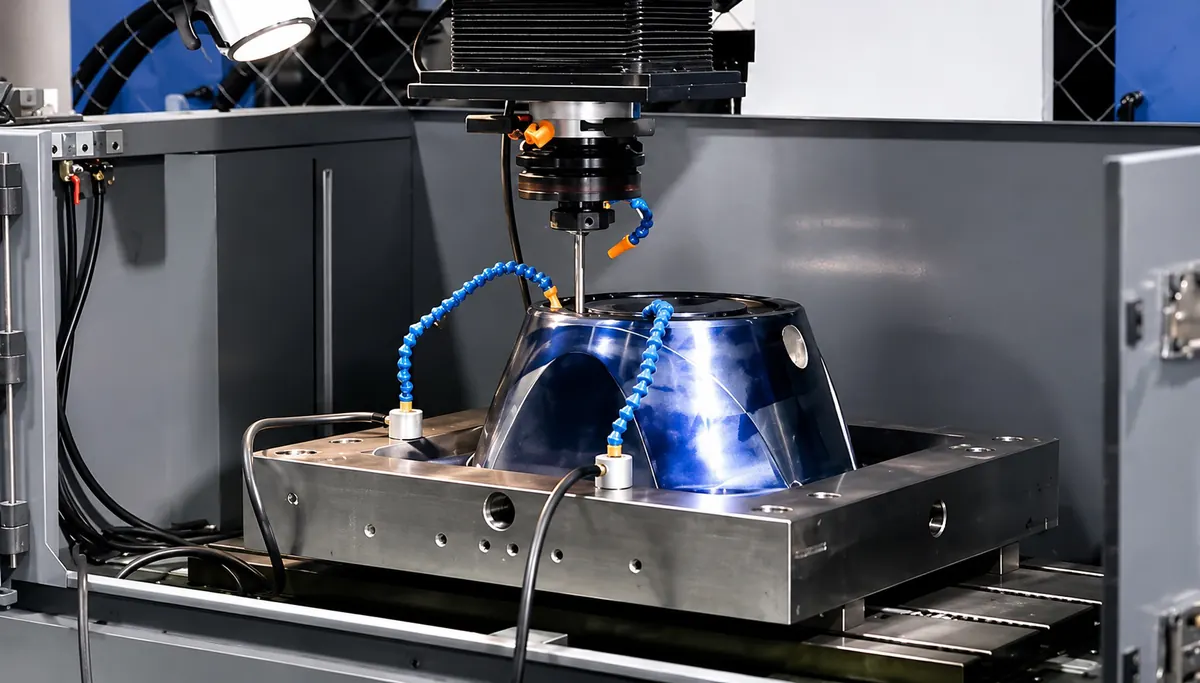
CNC machining and EDM
Cavities and cores are cut on CNC machining centres, with EDM for the geometry milling cannot reach — sharp internal corners, deep narrow ribs and fine detail in hardened steel.
- CNC machining of cavities, cores and inserts
- EDM for fine and inaccessible detail
- Mold flow simulation before cutting steel
- Cooling-channel layout and optimization
- Manual trial, fit-up and spotting
- Repair, refurbishment and spare tooling
FAQ
Tooling questions
Where are the molds built?
Mold design, CNC machining, EDM, mold flow simulation, manual trial and fit-up, and ongoing maintenance are managed within the same manufacturing platform as molding, so a tooling change is handled by the team that runs production.
Can an existing tool be transferred from another molder?
Yes — tool transfers are a standard program type. Send the tool drawings and last-run process parameters and we will come back on condition, any re-qualification needed, and a route back into production.
What is mold flow simulation and why does it matter?
It models how molten plastic fills the cavity before any steel is cut, predicting weld lines, air traps, sink marks and short shots. Correcting those in software costs hours; correcting them in hardened steel costs weeks and can mean re-cutting the tool.
Who maintains the tool once production starts?
The platform does, on site, for the tool’s production life. Molds wear — vents clog, shut-offs erode, cooling channels scale — and a tool kept next to the presses running it is attended to before the wear shows up in parts.
Why does cooling-channel layout matter so much?
Cooling is usually the largest share of cycle time, so channel layout drives both throughput and part quality. Uneven cooling warps parts and shifts dimensions; optimising the layout at the design stage is far cheaper than compensating on every cycle for years.
Have a tool that needs a new home?
Send the tool drawings and last-run parameters. We will come back on condition, re-qualification and a route back into production.